


A gated community or beachfront home can both deliver the Caribbean lifestyle many buyers picture: morning swims, warm evenings outdoors, and a property that feels like a genuine escape. But they offer very different versions of that life. One prioritizes structure, services, and peace of mind. The other places you closer to the sand, sea, and energy of the coast.
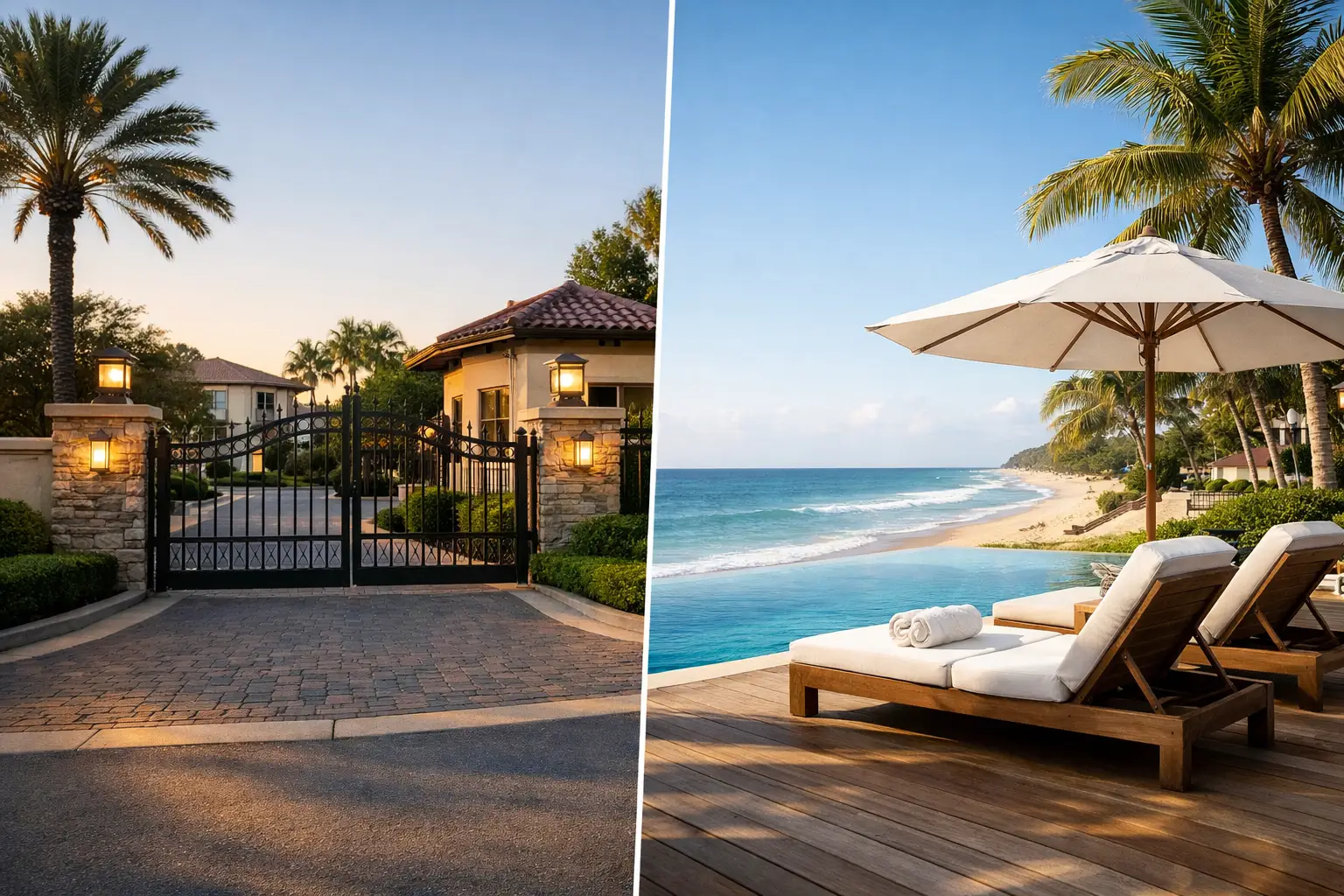
For buyers considering Sosua, Cabarete, or the surrounding north-coast communities, the better choice is rarely about which property looks more impressive in photographs. It comes down to how often you will use the home, how hands-on you want to be, who will occupy it when you are away, and what “easy ownership” means to you.
Gated Community or Beachfront Home: Start With Daily Life
A gated community is often the more predictable choice. Communities such as Casa Linda, Sosua Ocean Village, Sea Horse Ranch, and Perla Marina can provide controlled entry, maintained common areas, established rules, and a neighborhood environment that many part-time residents appreciate. Depending on the community, services may include security, road maintenance, landscaping, water systems, backup power arrangements, restaurants, fitness facilities, or beach access.
That structure is especially valuable if your Dominican Republic property will be a second home. You can leave for several months and return knowing there is a defined management framework around the neighborhood. It does not eliminate the need for a property manager or regular inspections, but it can reduce the number of moving parts an owner must coordinate.
A beachfront home offers a more immediate relationship with the coast. The sound of the water, an open ocean view, and the ability to walk directly onto the beach are not minor details. For many buyers, they are the reason to purchase at all. A true beachfront setting can also be highly compelling for vacation renters, particularly near well-known beach areas and activity centers such as Kite Beach in Cabarete.
The trade-off is that beachfront life is usually less contained. You may have greater exposure to passersby, beach activity, wind, salt, and changing conditions along the shoreline. Some buyers find that lively and liberating. Others discover they prefer the quieter, more private feel of a home set slightly inland.
The Real Cost Is More Than the Purchase Price
Two homes with similar asking prices can have very different ongoing costs. This is where buyers benefit from looking past the pool, view, and bedroom count.
In a gated community, monthly association fees are a central consideration. These fees may support security, shared infrastructure, grounds, lighting, garbage collection, and amenities. A higher fee is not automatically a negative. It can represent real value when the community is well managed and the services match your needs. The key is to understand exactly what is covered, how the association is governed, whether special assessments are possible, and the financial condition of the community.
With a beachfront property, maintenance often deserves a larger budget and more frequent attention. Salt air is beautiful, but it is hard on metal fixtures, air-conditioning units, window hardware, exterior paint, electronics, and pool equipment. Wind-driven sand and moisture can accelerate wear even in a well-built home. Protective finishes, routine cleaning, corrosion checks, and timely repairs are part of responsible coastal ownership.
Insurance availability and cost should also be reviewed early, particularly for properties directly on the water. A knowledgeable local agent can help you ask the right questions, but buyers should obtain property-specific information rather than relying on broad assumptions about coastal coverage.
Privacy, Security, and the Feeling of Home
Security means different things to different buyers. Some want a staffed entrance and a clear sense of who belongs in the neighborhood. Others are comfortable with independent security measures, such as cameras, alarms, exterior lighting, perimeter walls, and a trusted caretaker.
Gated communities appeal to buyers who value a consistent security presence and a more controlled environment. They can also be attractive for families with children, retirees who travel frequently, and owners who prefer a neighborhood where roads and common spaces have established standards. The social side can be a benefit as well. Many communities have a mix of full-time residents, seasonal owners, and international neighbors who create an easy path into local life.
Beachfront homes can offer exceptional privacy when they sit on a large parcel or within a protected enclave. Yet a property near a public beach may naturally have more activity nearby. Before making an offer, visit at different times of day. A quiet weekday morning can feel very different from a weekend afternoon, a holiday, or a windy evening when local beach businesses are active.
The goal is not to avoid energy or community. It is to make sure the setting matches your own rhythm. If you imagine reading quietly by the pool every afternoon, a beachfront home beside a busy beach bar may not be the right fit. If you want to step outside and be part of Cabarete’s watersports culture, that same location could be ideal.
Rental Potential Depends on the Guest You Want
Both property types can work as vacation rentals, but they tend to appeal to different guests.
Beachfront homes and condos often command attention because location is easy to understand and market. Guests will pay a premium for walkability, ocean views, and direct beach access. Properties near restaurants, surfing, kitesurfing, and nightlife can perform well with couples, groups of friends, and active travelers. However, strong rental demand can also mean more turnover, more coordination, and a higher standard of maintenance. Guests who book a beachfront stay expect the outdoor spaces, furnishings, air conditioning, and view corridors to feel as good as the listing promises.
A villa in a gated community may appeal more to families, longer-stay visitors, remote workers, and guests seeking privacy. A private pool, secure setting, reliable amenities, and enough space for several people can be a powerful combination. These homes may not have the instant visual draw of an oceanfront terrace, but they can deliver steadier demand from travelers who want comfort and convenience.
Before buying primarily for income, take a conservative view of projections. Consider occupancy, management fees, cleaning, utilities, maintenance reserves, association rules, furnishing costs, and periods when you may want the home for personal use. Rental performance is never guaranteed, and a property should still make sense as a home if booking patterns change.
Access Matters More Than Many Buyers Expect
Beachfront does not always mean easy access. Ask how you reach the property during heavy rain, where guests park, whether roads are public or private, and how deliveries, garbage pickup, and maintenance crews enter. If the home sits near the beach but not directly on it, confirm the nature of any claimed beach access. A view and an access right are not the same thing.
In a gated community, look closely at the practical details as well. How far is the home from grocery stores, medical care, restaurants, and the airport? Are there restrictions on contractors, pets, renovations, or short-term rentals? Does the community’s character feel welcoming to the way you intend to live?
For relocation buyers, these questions matter after the excitement of the first viewing fades. A home should support ordinary routines, not just vacation days.
Due Diligence Should Match the Property Type
Every Dominican Republic purchase requires careful legal and technical due diligence. That includes confirming title, boundaries, seller authority, taxes, condominium or association obligations where applicable, and the terms of any rental or management arrangements. Work with an independent, qualified local attorney who represents your interests and can review the specific property documents.
Beachfront purchases deserve additional attention to surveyed boundaries, access, coastal conditions, drainage, and the condition of structures exposed to the elements. For a gated-community property, review association documents, current fees, rules, meeting records when available, and whether there are planned infrastructure projects that could affect future costs.
A thorough inspection is valuable in either setting. It should focus not only on visible finishes but also on roofing, electrical systems, plumbing, pool equipment, water storage, air conditioning, and signs of moisture or corrosion. The right property is not simply the one with the best first impression. It is the one whose ownership realities are clear before you commit.
Choose the Lifestyle You Will Actually Use
A gated community is often the stronger fit when you want a managed environment, established services, predictable routines, and a home that is easier to leave unattended. A beachfront home may be the better fit when the ocean is central to your personal vision, you enjoy an active coastal setting, and you are prepared for the care that comes with being close to the water.
There is also a middle path worth considering: a villa or condo within a secure community that is a short walk or drive from the beach. For many buyers, that balance provides privacy and practical support without giving up the coast as part of everyday life.
The most rewarding purchase is the one that still feels right after you picture the unglamorous moments: arranging a repair, arriving after a long flight, hosting family, leaving for the summer, or simply buying groceries on a Tuesday. When a property supports those moments as well as it supports the dream, you may have found your piece of paradise.